Simondale Excavating from Warriors Mark, PA

Simondale Excavating is doing an excellent job of leveling some ground on a hillside.  If you need any excavation work in the Altoona/Tyrone/Huntingdon/State College area (or nearby), do not hesitate to call Jim or Matt at (814) 632-8590.

Upon meeting Jim Simondale and Matt Simondale, I was very impressed by their knowledge, demeanor, and interest in my project.  I met with them 3 times on site prior to starting this project, and every detail has been covered as discussed.

This may seem like a small thing, but I appreciated that all of their equipment (trucks, excavators, bull dozers, etc…) were newer models, very well maintained, clean (as is reasonable), and had their logo painted neatly across.  All signs of being professional.

[As I understand it, they are also do quite a number of septic systems and sand mounds.]

Update: June 2011: Matt and Jim and their crew came out again and did another whole round of grading, moving, and excavating.  They built and/or surfaced over 1/4 mile of slate covered roads, dug a pond, corrected some frost damage to earthen banks, and made everything really nice.  I thought the price estimate was very fair, and they came in dead on, despite doing a number of extras.  Here is an updated photo:
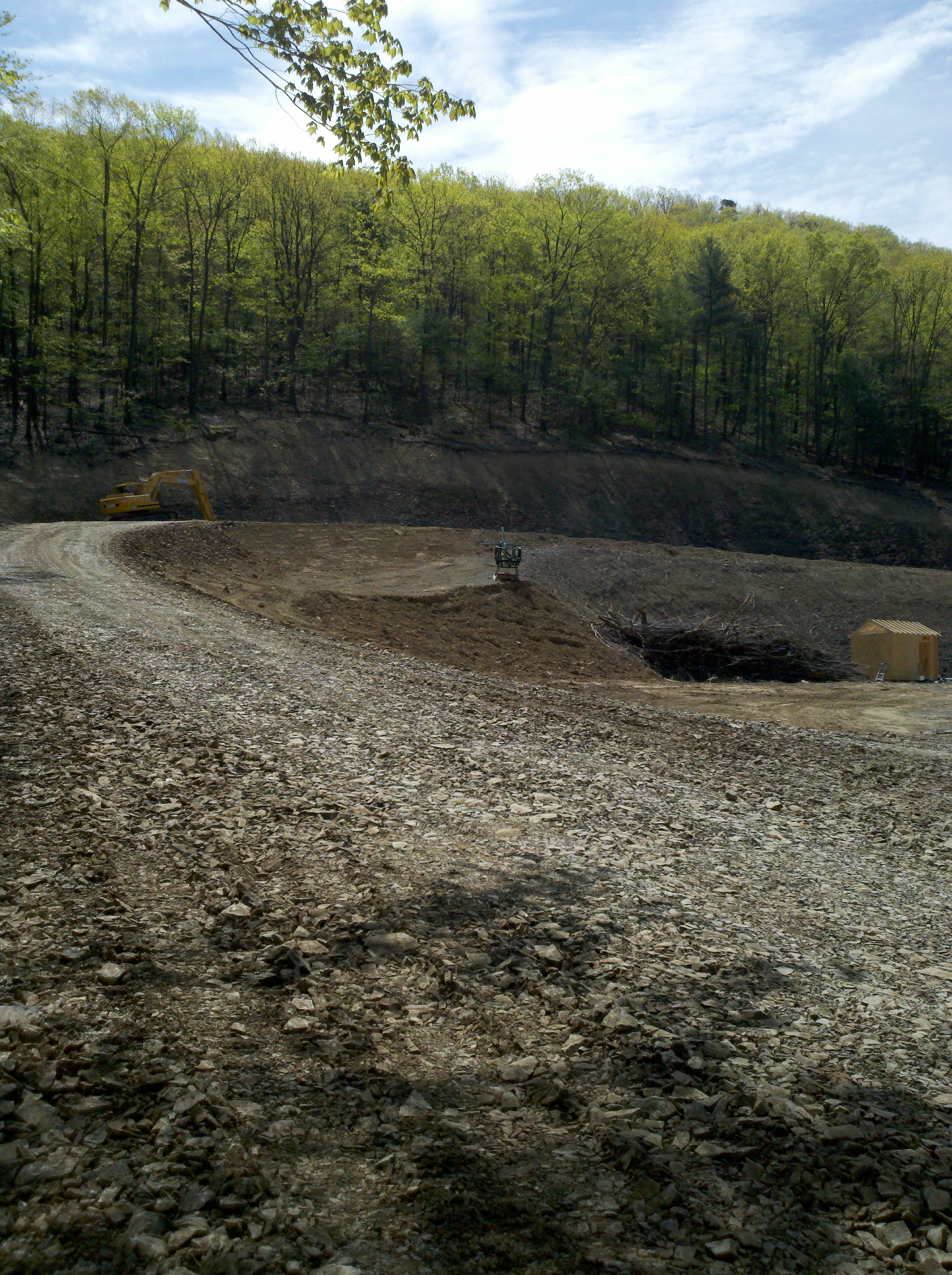

Outstanding view from the top of the hill.
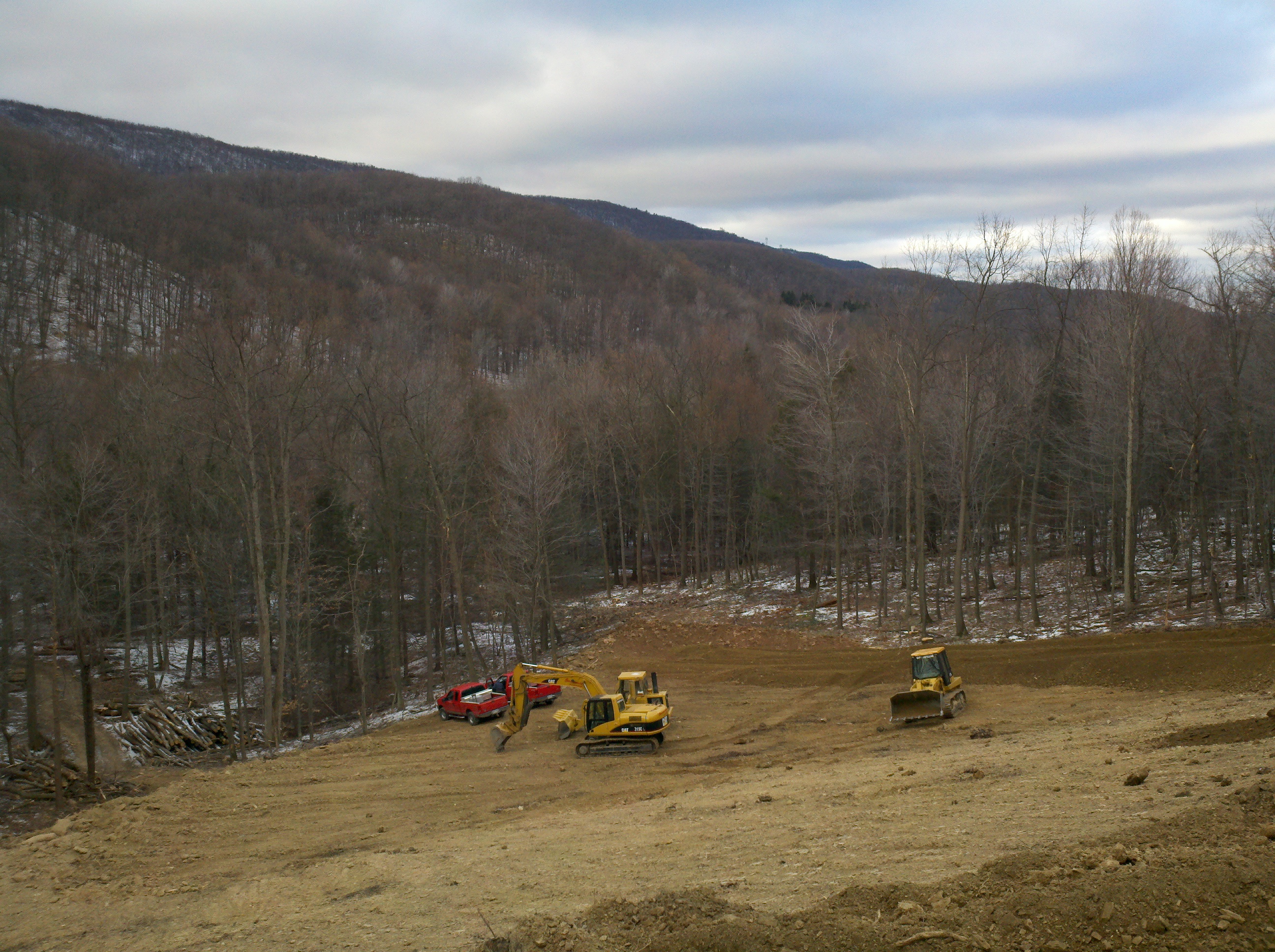
See how nice the grading of the bank is?  All done with the large excavator pictured above.

And Mr. Ezra, standing on top of the hill…

A four wheeled wooden vehicle

Too many days in a row, I had not had enough “hands on” work to do.  So I decided to build a little toy that Zechariah would like.  Four wooden wheels, some bolts and washers, and a block of wood for the body, and we made a cool little car (or skateboard).

In the middle of it, this little girl showed up all by herself in the workshop wanting to help.  So she put all the washers on.

Anna placing washers on the wheel.


Eli, of course, was there as well turning the wrench.  We used 5/16″ bolts with a smooth shaft for the first 1″ or so as an axle.  We just turned them right into the wood, drilling the hole in the wheels a bit bigger, and the hole in the body a bit smaller for a snug fit.

Eli turning the wrench.


Here are the scraps left over after bandsawing.  I did a quick job of cutting them, so they were not exactly round.

After cutting the wheels


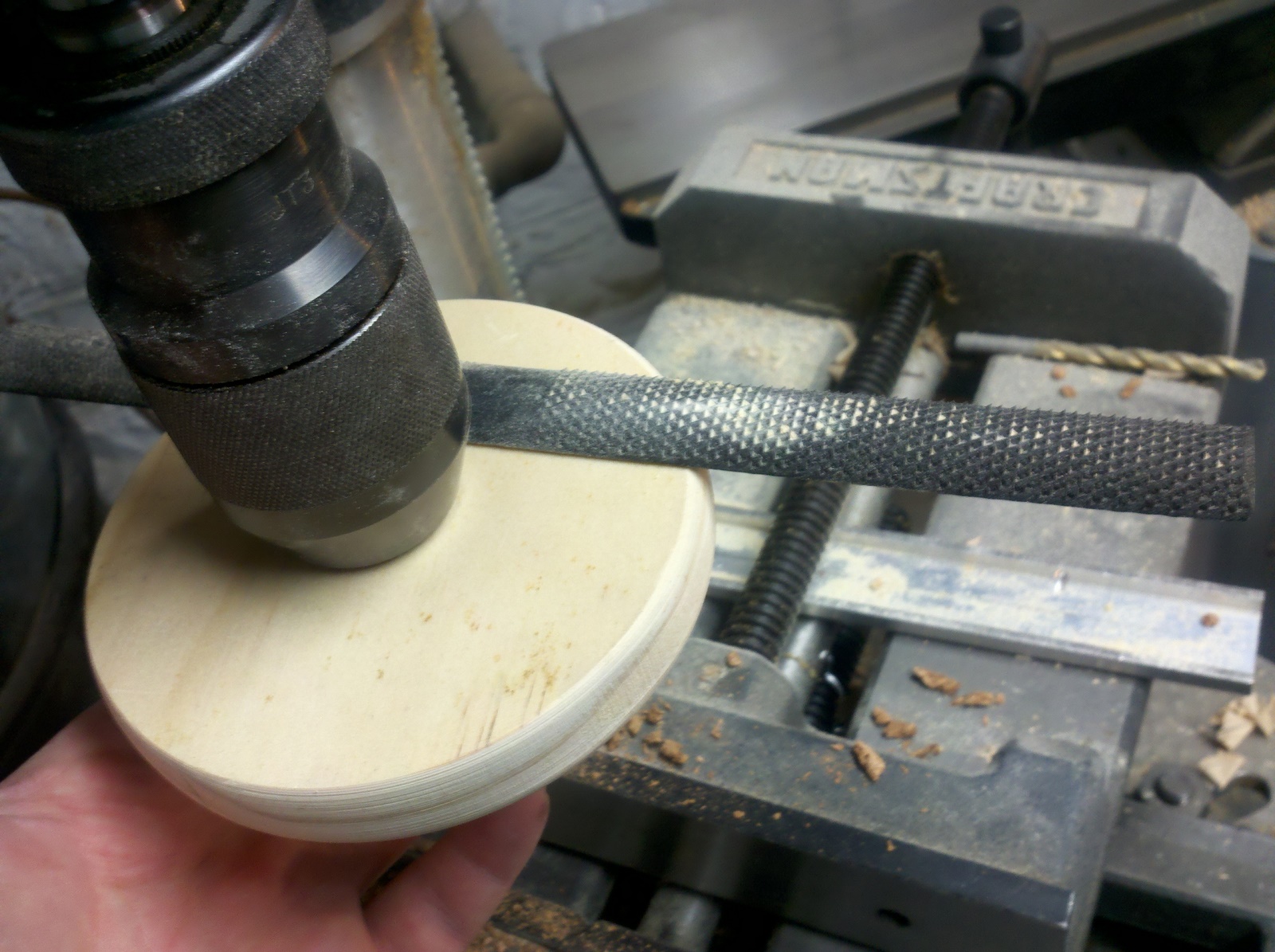
I used a drill press and a rasp to round out and smooth the wheels down.

Rounding the wheels

Finally, here is Zechariah quite fond of his new toy.  Another confirmation that we don’t need super-slick toys — kids love stuff that is simple.

Finished product with a happy owner.

Detailed Assembly of Rubber Band Gun M6-002 to M6-005

A few photographs of our assembly of M6-002 to M6-005…

It all started by laying out all of the pieces for each assembly.  Quite a few when you add them all up.  Pictured below are the parts for 4 assemblies.  Receiver, Pins, Actuator, Hammer, Trigger, Washers, Springs, Bolts, and Nuts, along with some tape to hold the loose pins in (temporarily).

Refer to https://blog.gahooa.com/2010/09/23/rubber-band-gun-6-four-pieces-explained/ for more information on each piece.

Here is the receiver.  Note, the two small holes beside each other.  This is to allow for an adjustment to spring tension if needed.

These springs are tough little guys.  ~ 9 pounds per inch, with a max travel of just over 1/2 ” (if I recall correctly).  They also cost $1.29 each in quantities of 100+.

In order to use them, I needed to snip the closed loop open on one end.

Following this, the springs were hooked onto the actuators.

Using dowel pins, we placed the actuators and springs into the receiver…

… separated by red, hard fiber washers.  These washers have a very tight thickness tolerance, which is needed in this application.

Once the actuator was in place and the springs fully connected, we inserted the hammers.

The hammers had more room for spring stretch, so we opted for a cheaper, longer stretch spring (about $0.50 each in small qty).

The most interesting, and hardest to machine piece in the assembly is the trigger.  Due to an error in machining, the trigger hole was drilled to just 0.250 inches, instead of the 0.1875 the drawing called for.  I purchased a 0.2503″ reamer (accurate to +/- 0.0001″ (yes, a ten thousandth of an inch).  This made the trigger fit perfectly on the dowel pins (but only after blowing the dust out!).

Another view of the trigger.  Notice the step in the aluminum… This is what causes one hammer to release before the other.

I chose stainless steel screws to hold the mechanism into the wooden stock, although other methods could be employed.  Plus, I just like close up photographs, so I included this one.

Here are the four assemblies finished.  The tape is placed over any loose pins to keep them from falling out.  The wooden stock will retain them firmly, similar to the design of a Ruger 10/22.

A close up shot of the receiver.

And the excellent helpers…

Now we just need to make several more stocks!


New Toys: EzMobile

I have a theory that it’s the adults that think the fancy plastic toys are somehow cooler than their simple counterparts.  Kids on the other hand are using their imagination (at least should be), and don’t really care how pixel-perfect it is.

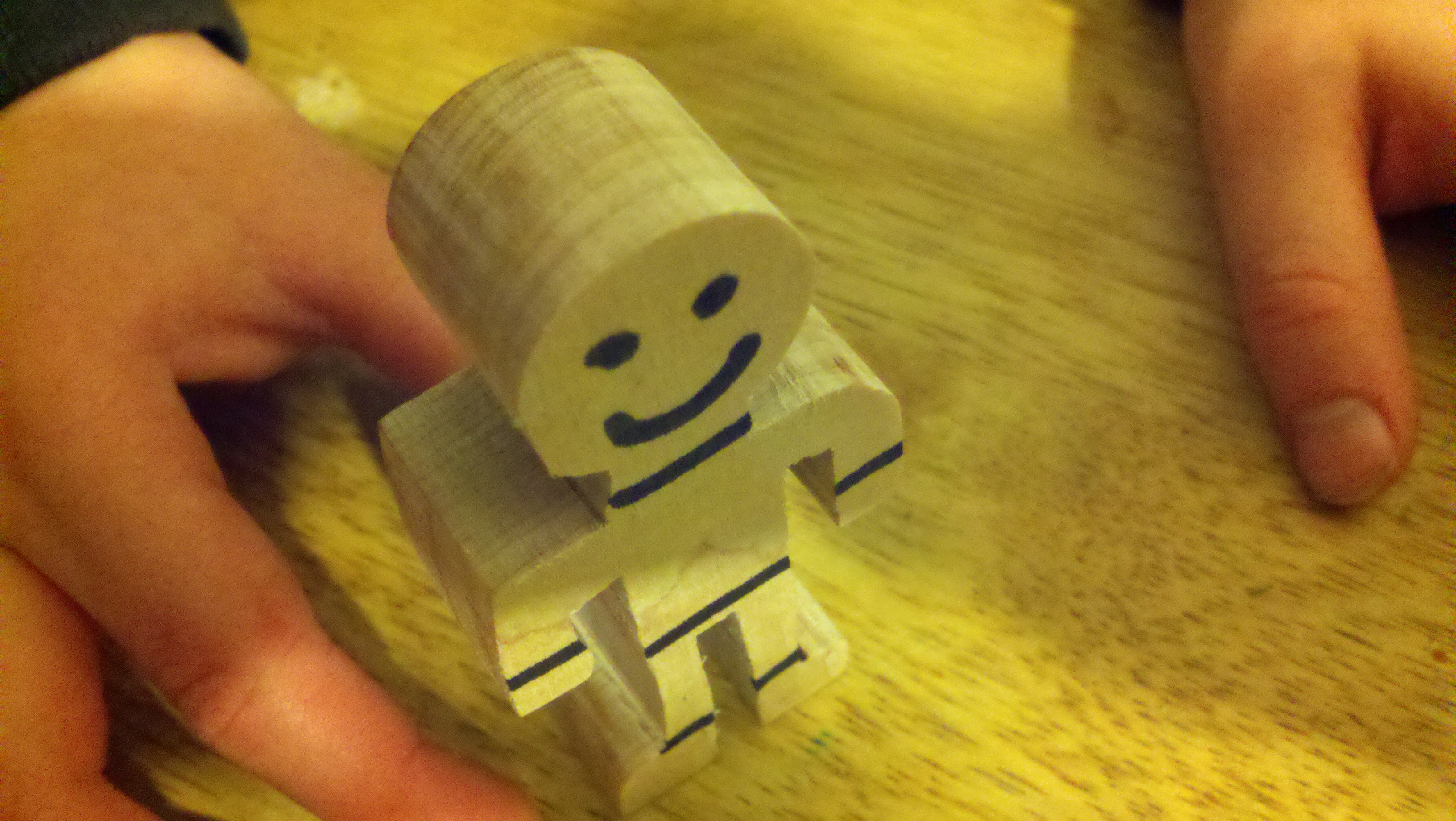
My theory was verified when 5 minutes after taking this photo, Ezra flew a $15 toy helicopter past me with this little EzMobile guy hanging out the door  :)


A new stock for rubber band gun #6

In anticipation of receiving the assembly for Rubber Band Gun #6 from Dixon Tool and Die, Inc., we have been making a new rubber band gun stock to complete the package.

This stock was hand crafted out of solid 1.75″ x 6.0″ x 48″ slab of maple.  The primary tools were bandsaw (for the profile), hammer and chisel, random orbit sander, end mill, jointer, sand paper, and lots of elbow grease.

There is a technique that we implemented called “raising the grain”.  It involves rubbing the wood with a wet rag, and then letting it dry.  Loose pieces of grain swell up and in turn raise up out of the wood, where they can be sanded off.

At the bottom-left corner of this photo, you can see another blank ready to be cut.

A lot of thought and testing went into this simple design and it works really well.  The catch (no pun intended) is to allow the rubber bands to release cleanly with no interference.

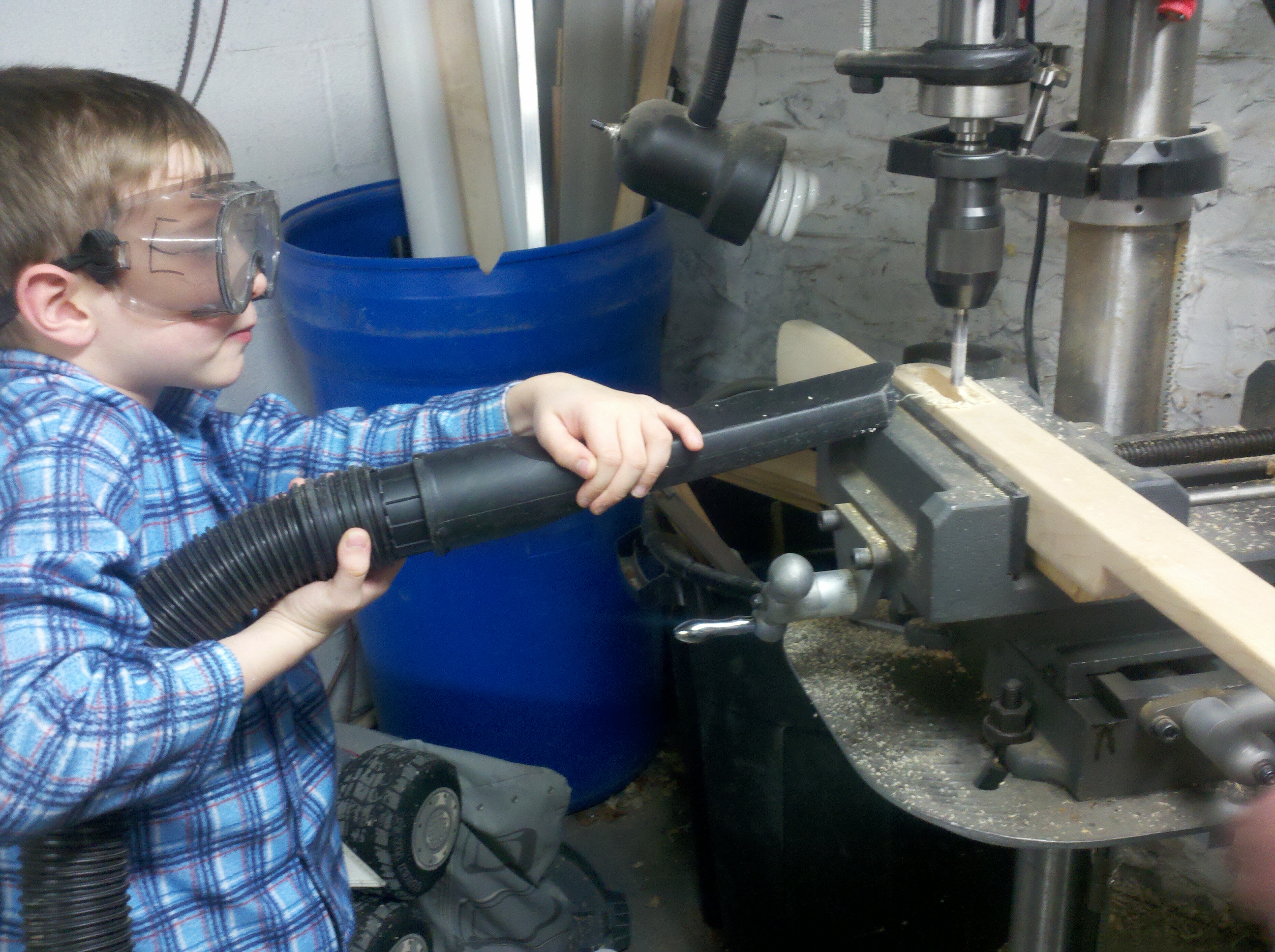
Here is Mr. E holding the shop-vac to keep the end mill from clogging up.  My Sherline milling machine is not large enough to hold this stock conveniently, so we used a drill press and cross-slide vice to mill it out.  Drill presses are not as rigid as milling machines, so we had to take it slow.

Melting table salt in a red hot spoon.

We were using a bunsen burner hooked up to a propane tank to heat a spoon, and the salt in the spoon, red hot in order to melt the salt.

According to the wikipedia article on salt, the melting point is 1474 °F.  See further comments after this picture…

Melting salt in a spoon over a propane burner

It took a while, but we did get it to melt.  I “poured” it onto a metal surface, and you can see it still glowing here:

And for reference, here is what a Sodium Chloride crystal looks like up close: